Capital One
Modernizing a complex enterprise requirements ecosystem
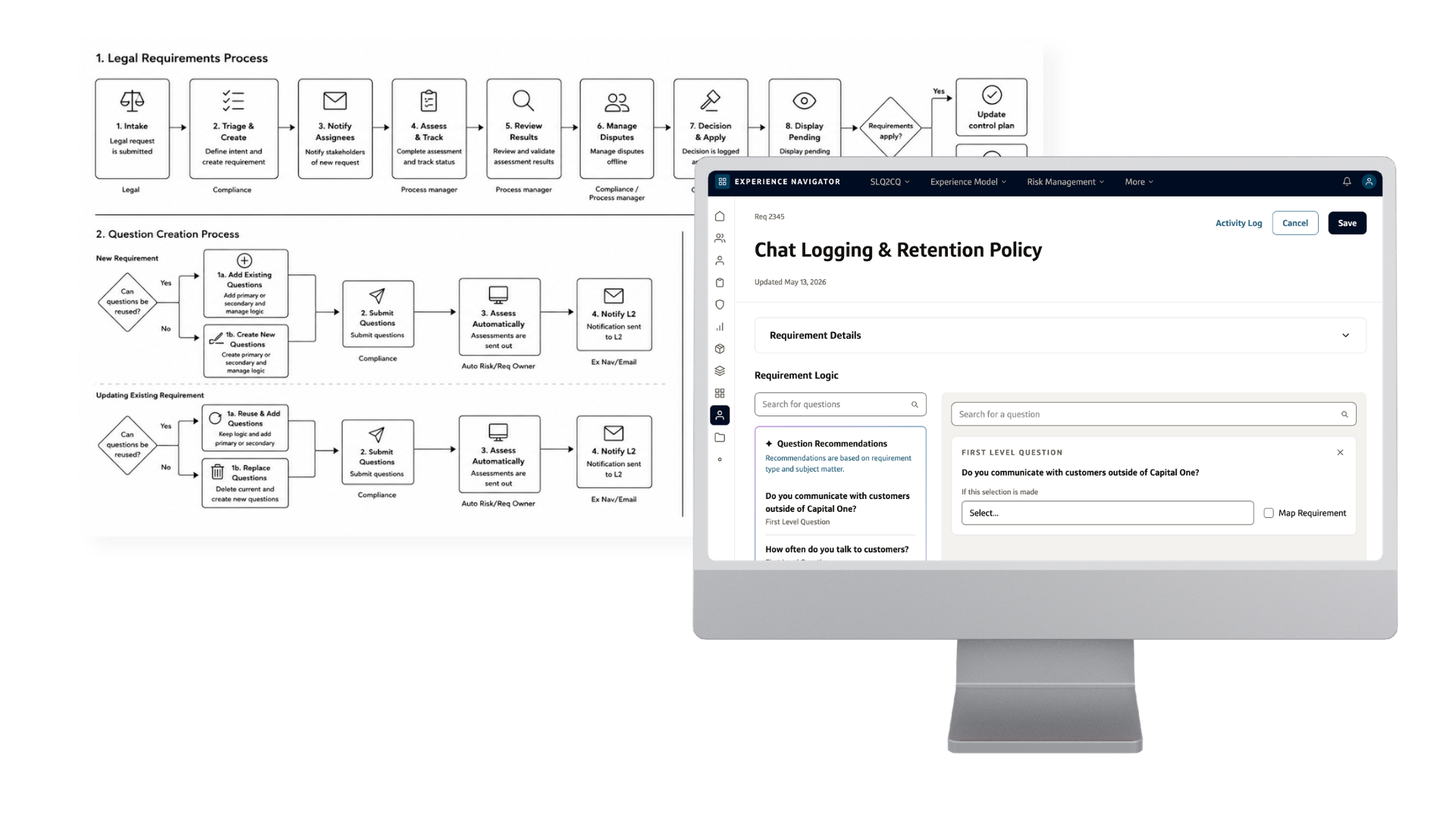
Project overview
The problem
Years of platform growth had created fragmented workflows, outdated interaction patterns, and requirements managed across spreadsheets and legacy systems. Modernizing the experience meant simplifying workflows across three teams, four tools, and many meetings to manage ~17K requirements successfully.
Constraints
Multiple user groups (process managers, compliance, vertical risk advisors) entered and navigated the experience differently
Existing workflows and historical platform patterns needed to be considered
Complex legal and compliance requirements shaped the experience
Tight design and development timelines required rapid alignment and iteration
Solution
A redesigned requirements ecosystem that brings three teams, fragmented workflows, and legacy tools into a connected experience for managing enterprise legal and business requirements.
Role
Lead UX Strategist and product designer
Team
2 Product managers + 4 Developers
Tools
Figma Make, Figma, Lucid
Outcomes
4 → 1
Fragmented tools consolidated
~30%
Reduction in requirement processing time
60%
Reduction in manual tracking
My process
Mapping complex workflows to define the target state
The challenge extended beyond modernizing an existing application. Three teams participated in different parts of the requirements lifecycle, supported by a combination of RAMP, spreadsheets, legacy tools, and established processes.
I mapped how users entered and moved through the experience to understand their responsibilities, dependencies, and where workflows intersected.
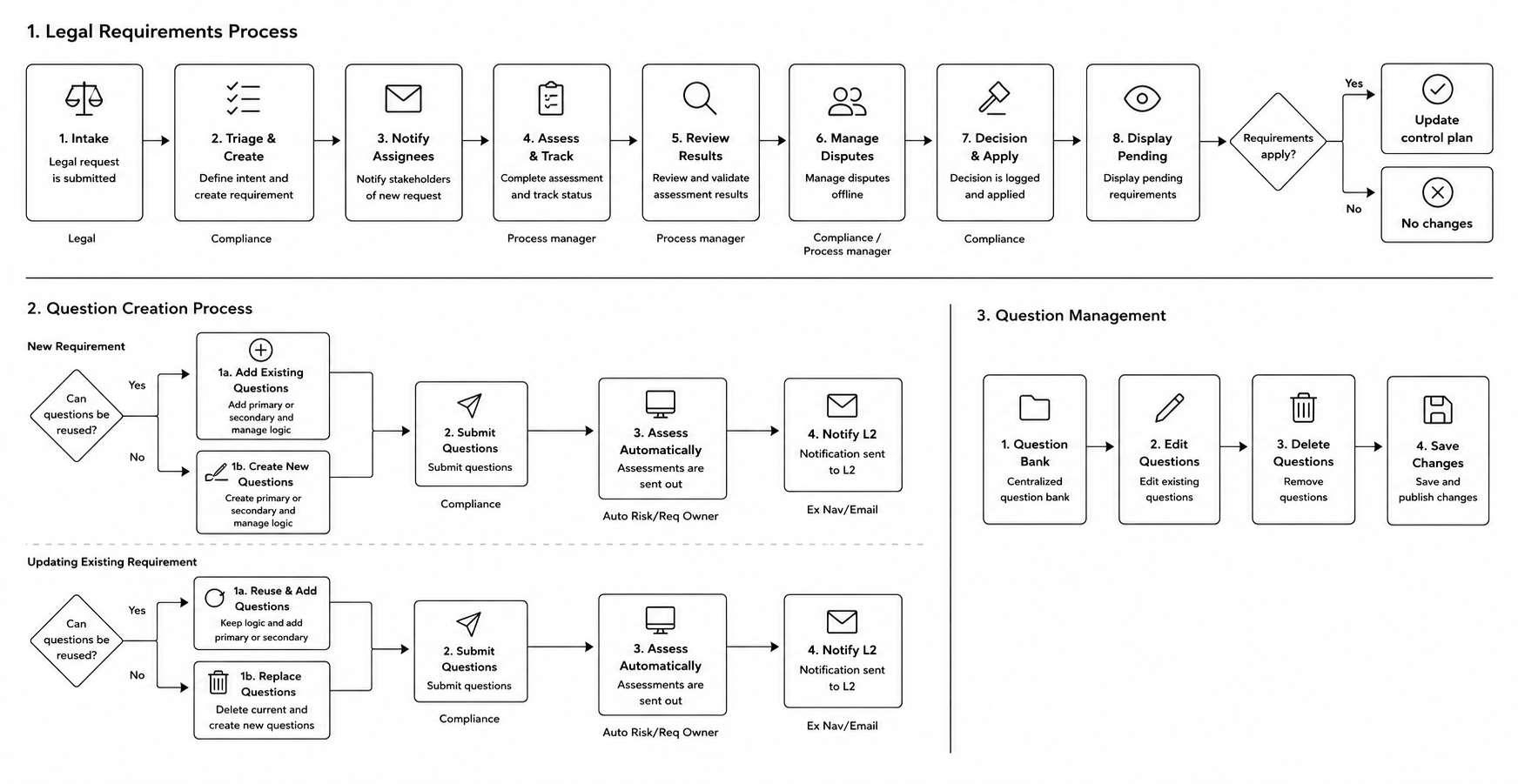
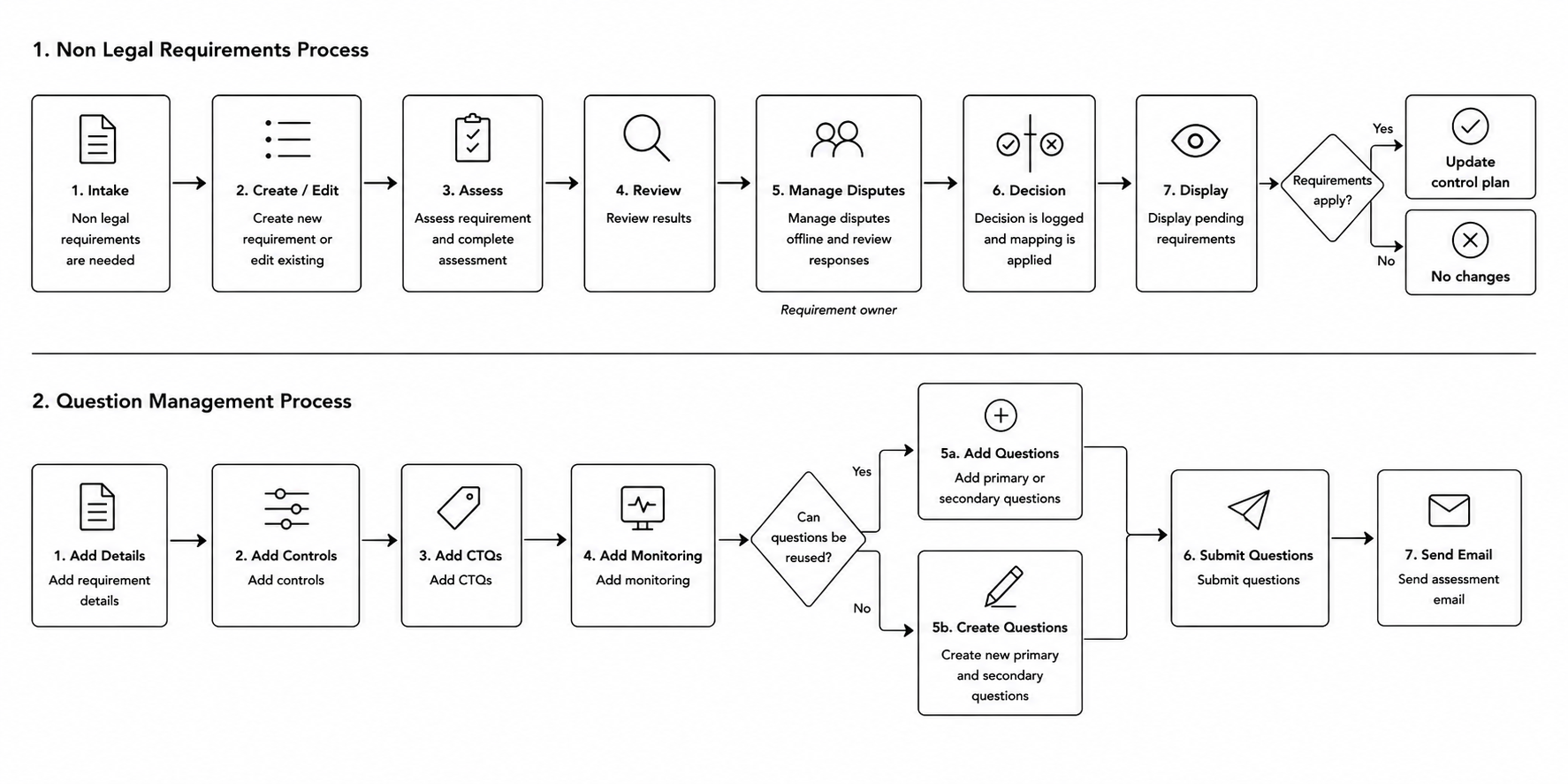
Key challenges
Different user groups entered the platform at different stages of the workflow
Historical platform patterns didn't always support emerging user needs
Business and compliance requirements introduced complexity across workflows
Cross-functional workshops to align the system
I facilitated cross-functional alignment workshops with Product, Compliance, and other partners to establish a shared understanding of how the future experience should operate.
These conversations helped us move beyond individual team requirements and make decisions around a shared target-state experience.
Strategic decisions
Identified common patterns that could work across user groups
Defined where workflows needed to diverge based on user needs
Aligned Product and Compliance around the target-state experience
Established a core experience that could scale to additional workflows
Research to validate workflows and uncover opportunities
I conducted research with Product partners to understand existing workflows, pain points, and requirements.
I shared recommendations that connected user needs with broader system decisions and shared the research with Product and Risk leadership.
This gave stakeholders visibility not only into individual usability issues but also into how decisions in one part of the experience could affect the broader requirements ecosystem.
Key insights from process managers
The requirement dispute process lacks transparency and requires multiple systems to manage
Overwhelmed by requirement volume and lack of prioritization
Key insights from compliance
Legacy system lacks the flexibility to search for and edit questions
Sorting through 500+ questions leads to unmanageable duplicates
Key insights from vertical risk advisors
Legacy system lacks the flexibility to search for and edit questions
Managing statuses through spreadsheets is redundant
Rapid exploration and testing to accelerate design
I partnered with Product and Engineering to evaluate what should be preserved, standardized, modernized, or replaced.
With a tight timeline and multiple interconnected workflows to solve, I used Figma Make and Gemini to ideate solutions.
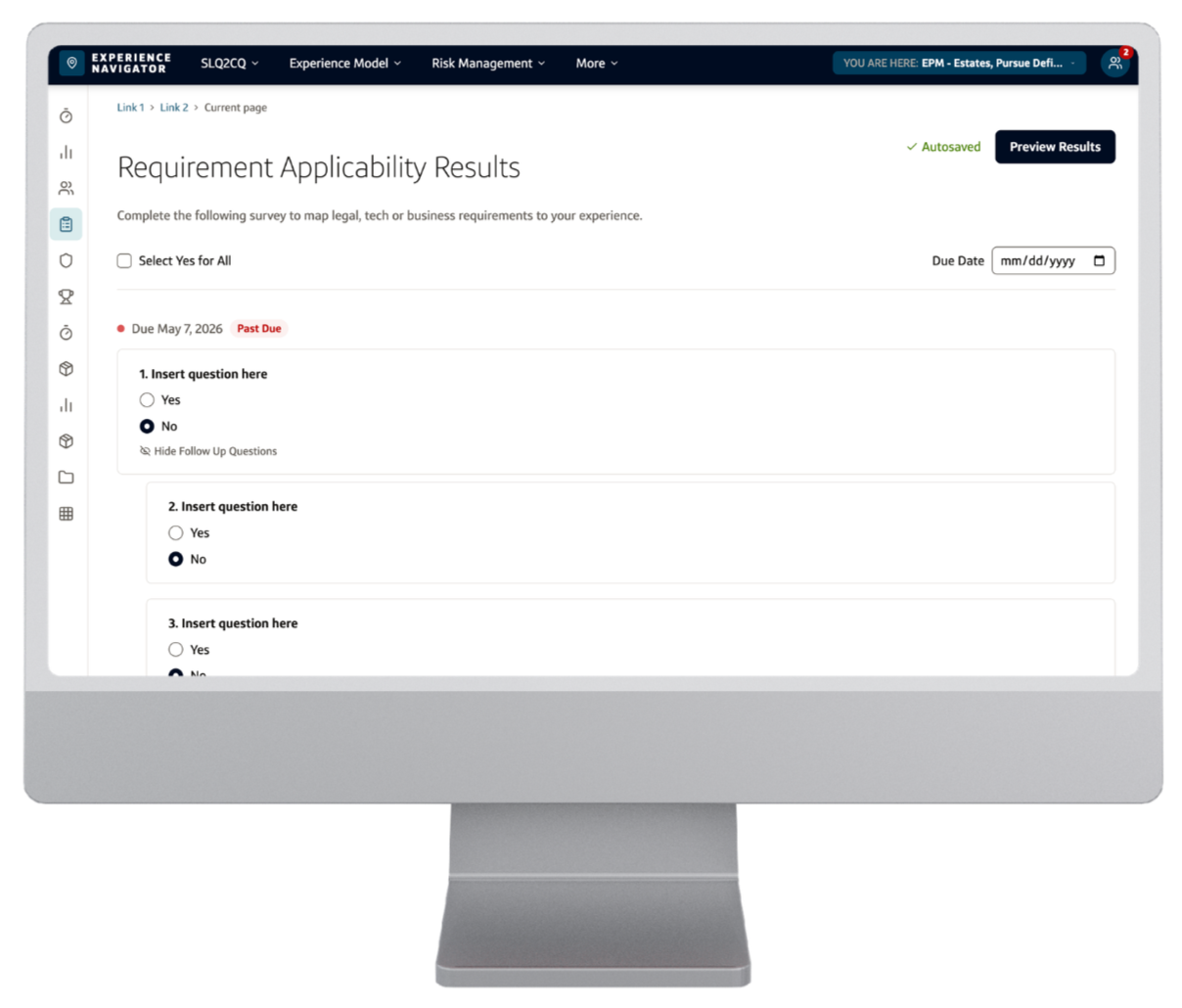
Process managers are able to complete requirement surveys in their home platform, reducing the number of systems to manage requirements.
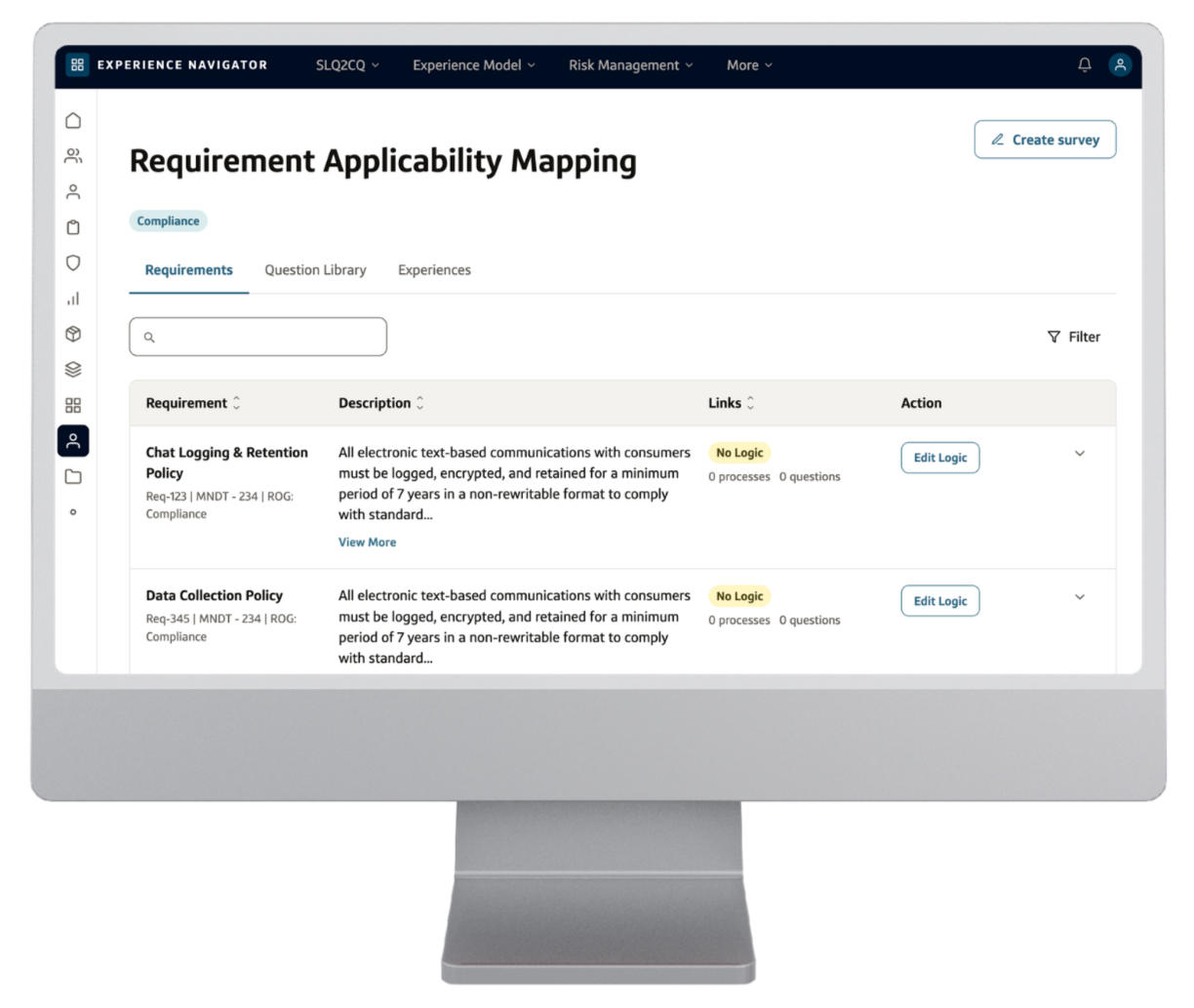
Compliance and vertical risk advisors can manage requirements on one platform. Eliminating manual trackers.
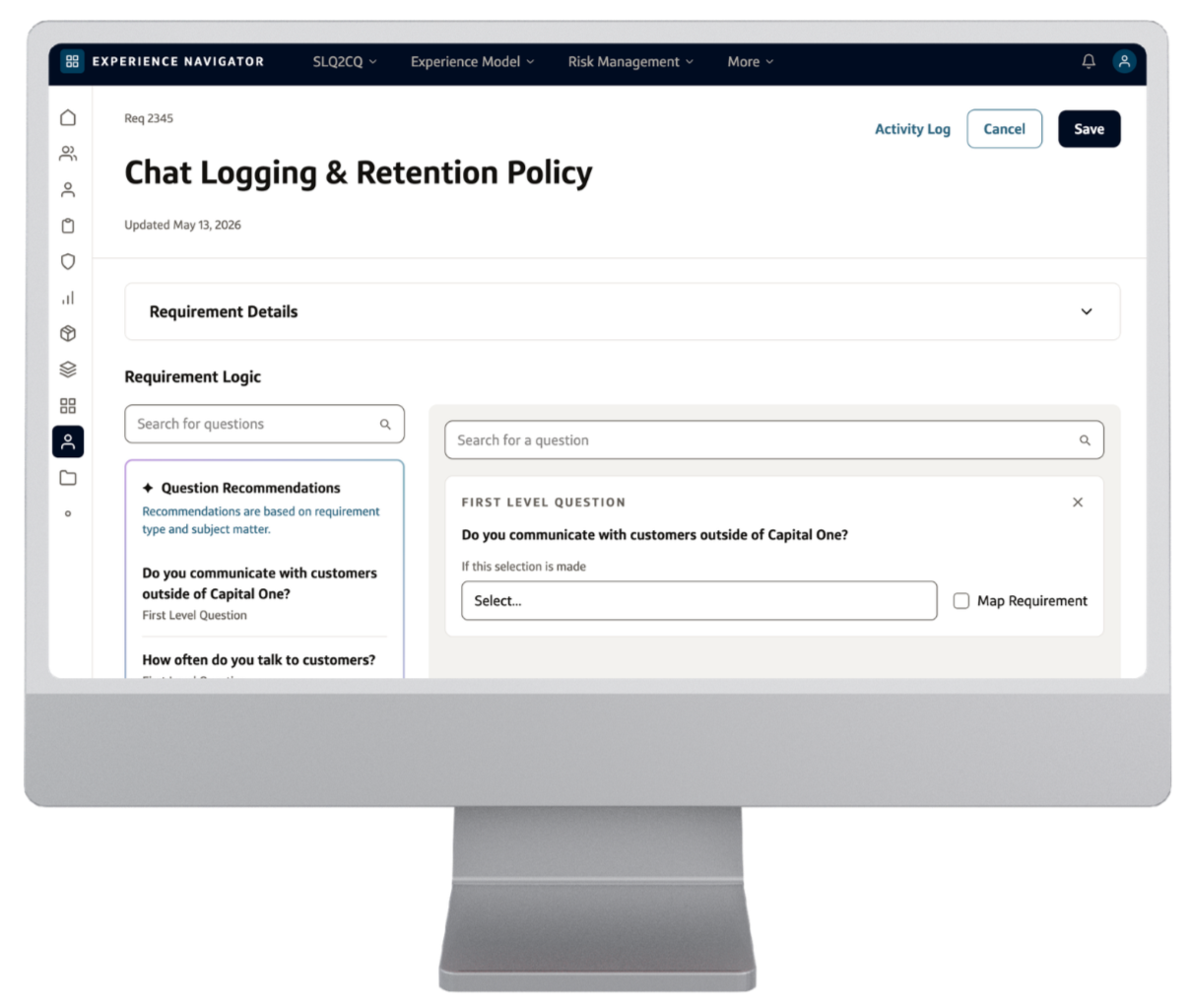
Enhanced flexibility to sort through 500+ questions and AI recommendations to improve the survey creation process.
Strategy to delivery
After validating the initial experience direction, I transitioned the strategy, research insights, and design concepts to another designer, who carried the experience through detailed design and implementation.
Outcomes
My work established the experience strategy and target-state vision for a centralized requirements ecosystem. After defining and validating the initial concepts, I transitioned the work to another designer who evolved the strategy through detailed interaction design and finalization.
The resulting direction transformed how three teams manage enterprise legal and business requirements:
4 → 1
Fragmented tools consolidated
The target-state strategy consolidated four disconnected tools into one centralized requirements experience, reducing fragmentation across the end-to-end process.
~30%
Reduction in requirement processing time
Streamlined workflows and fewer system handoffs reduced the time required to process requirements by approximately 30%.
60%
Reduction in manual tracking
Centralizing requirement status, ownership, and workflows reduced reliance on spreadsheets and other manual tracking processes by 60%.